

Best Portable Wound Care Kit for Hiking & Outdoor Workouts
The eight items below are ranked for hiking and outdoor workouts on four criteria: how likely the injury is out there, whether the item works when there is no sink and no clean hands, weight and pack volume, and how many jobs it does. Irrigation capacity ranks first because cleaning is where trail infections are won or lost, bleeding control ranks second, and pre-cut hydrocolloid patches rank third for the blisters and scrapes you will actually collect. We make SUPERBAND hydrocolloid bandages, so we have named ours where it belongs and left it below the two items that outrank it.
Our gym-bag kit article assumes a locker room twenty steps away. A trail kit cannot assume that. You are hours from a sink, your hands are dusty, the water in your bottle is the only clean water within a mile, and the dressing you put on now has to survive a river crossing, a pack strap, and a night in a tent before anyone looks at it again.
That distance changes what belongs in the pouch. In the front country, cleaning a wound thoroughly is something the clinic does. In the backcountry it falls to you, and as the Center for Wilderness Safety protocol puts it, thorough irrigation in a remote setting reduces the urgency of evacuation and leads to a better long-term outcome.
How we ranked these eight items
Every item earned its place against the same four questions:
- Injury likelihood outdoors. Blisters, scrapes, thorn and rock cuts, and tick bites are the common trail injuries. Gear that only addresses rare events ranks lower.
- Works without a sink. Can you use it with dirty hands, no running water, and no flat clean surface?
- Weight and volume. A kit you leave in the car protects nobody. Grams matter.
- Multi-use. An item that handles three problems beats three items that each handle one.
Items 1 and 2 outrank our own product on the first two criteria, and we ranked them that way because that is what the evidence supports.
1. Treated water plus a way to deliver it under pressure
The single highest-value thing in a trail wound kit is the ability to flush a wound hard with water you would drink. Divers Alert Network describes irrigation as the most important step in wound cleaning, done best with a needle-free syringe that produces a narrow, high-pressure stream, and notes that any water clean enough to drink is clean enough for wound care, in generous volume.
Practically, that means two things you probably already carry plus one tiny addition:
- Your filter, tablets, or UV pen, already in the pack.
- A 10 mL to 20 mL irrigation syringe, or a bottle cap with a pinhole, or a zip bag with a pinhole in the corner. All of these produce usable pressure.
- Patience. Volume does the work, so keep flushing until the wound bed looks clean.
Pressure irrigation has one exception: Wilderness Safety guidance warns against using it on puncture wounds where the fluid cannot drain back out. The Mayo Clinic advises against hydrogen peroxide and iodine on the wound itself because both irritate tissue, so leave the peroxide at home and carry more water instead.
2. Gauze pads and something to hold pressure
Bleeding gets handled before anything else, and it is handled by pressure held long enough. A few sterile gauze pads weigh almost nothing and cover the whole range: soaking up blood, drying skin before a dressing goes on, padding around a blister, and scrubbing the intact skin around an abrasion.
If blood soaks through, stack more material on top rather than peeling the first layer away, since lifting the dressing restarts the clot. A bandana or buff you already carry works as backup pressure material.
3. Pre-cut hydrocolloid patches
This is the category we make, and it earns third place rather than first because it is downstream of cleaning and bleeding control. Once a wound is clean, a hydrocolloid patch is the most useful cover you can carry for the injuries outdoor days actually produce.
The reasoning is moist wound healing. The American Academy of Dermatology advises keeping a cut or scrape moist and covered rather than letting it dry out, because wounds that form scabs take longer to heal. Hydrocolloid does that job by sealing and absorbing exudate, without you having to carry a tube of ointment that leaks in a hot pack.
For blisters specifically, the evidence is closer to home. A review of friction blisters indexed on PubMed found that treating deroofed blisters with hydrocolloid dressings provides pain relief and may allow continued physical activity, which is exactly the trailside question: can I keep walking. Wilderness Medical Society wound care guidance, as summarized in a 2019 Wilderness & Environmental Medicine case report from Everest Base Camp, recommends draining larger blisters while leaving the roof intact and then covering with a hydrocolloid or hydrogel patch.
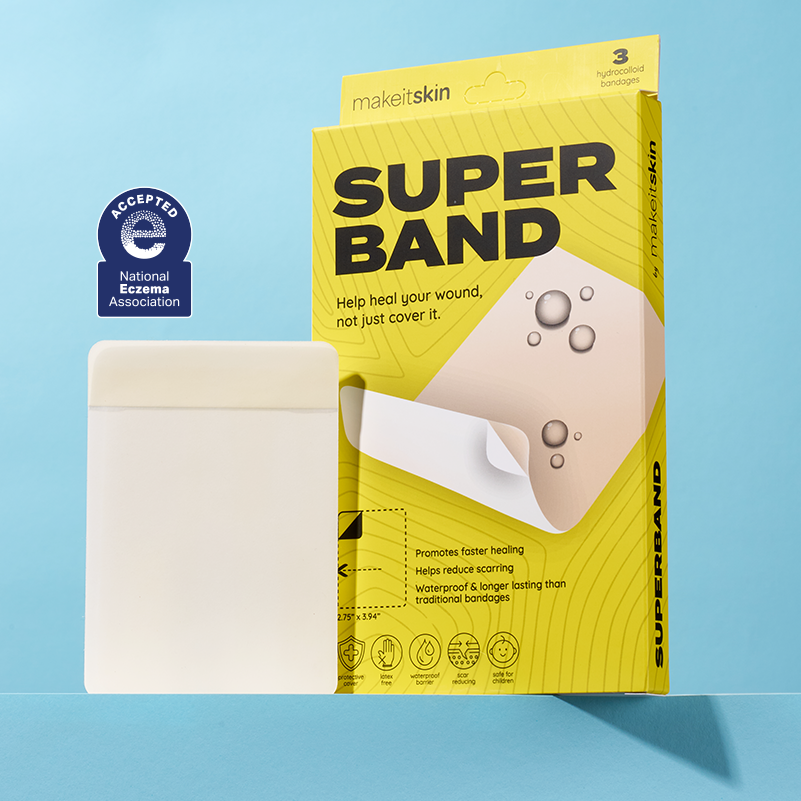
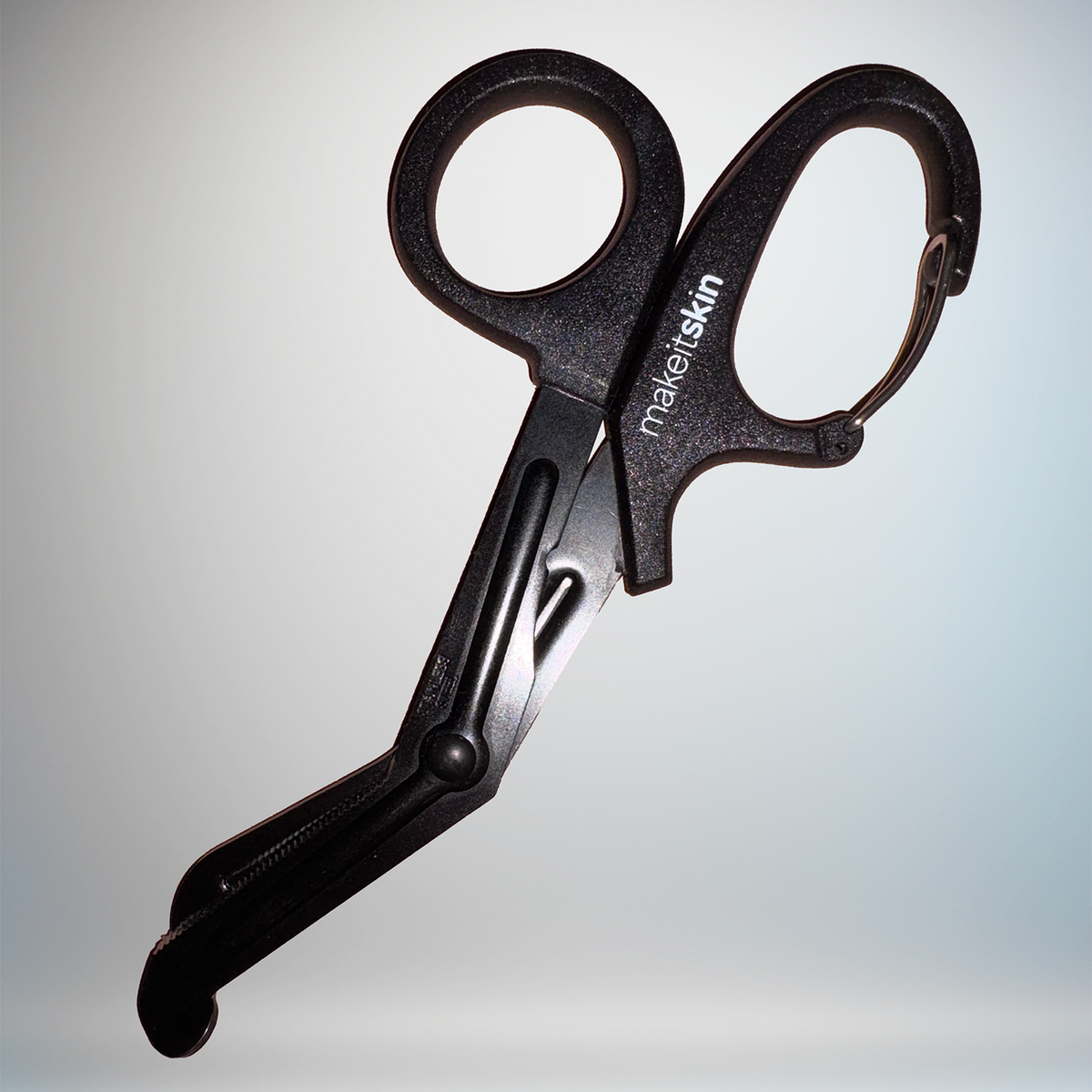
What we carry ourselves is SUPERBAND On-The-Go ($15), the pre-cut pack. Pre-cut is the right format on the move: no scissors, no flat surface, no cutting with dirty hands at mile twelve. Our Cut-To-Size flat sheets ($20) and the Precision Carabiner Shears ($10) are the at-home half of the system, where you can sit down and trim a piece to fit a knuckle, a heel curve, or an odd-shaped scrape before you leave.
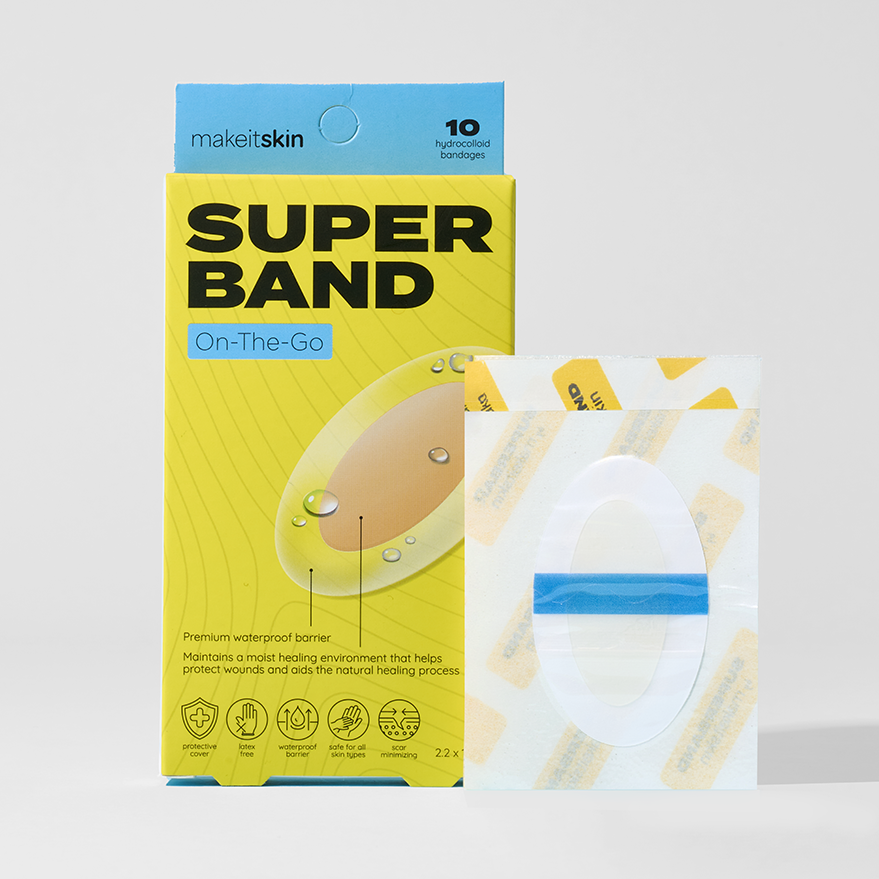
Honest limits, since this is our product and we would rather you know: hydrocolloid is for minor wounds, blisters and superficial scrapes. It is not for deep lacerations, heavily contaminated wounds you could not flush clean, or anything you would want stitched. And skin tolerance to adhesives varies between people, so if a patch has irritated you before, it will do so on the trail too.
4. Fine-tipped tweezers
Tweezers do two jobs, which is why they outrank tape. First, debris: the Mayo Clinic advises removing dirt or gravel with tweezers cleaned with alcohol, and seeing a clinician if you cannot get it all out. Second, ticks. The CDC recommends grasping the tick as close to the skin's surface as possible with clean, fine-tipped tweezers and pulling upward with steady, even pressure without twisting or jerking, then cleaning the bite area and your hands afterwards.
The CDC is also clear about what not to do: no petroleum jelly, heat, or nail polish to make a tick detach, because agitating it can force infected fluid into the skin. If mouthparts break off and will not come out easily, leave them alone and let the skin heal.
5. Tape that sticks to sweat
Medical or kinesiology tape holds a dressing on a moving joint, backs up an edge lifting off wet skin, closes a small gaping cut loosely, and tapes a hot spot before it becomes a blister. Wrap a yard or two around a trekking pole or a lighter instead of carrying the roll.
Dressings and bandages are different jobs, as DAN spells out: the dressing goes on the wound, the bandage holds it there. On a hip belt line, a heel, or a knuckle, tape is what makes the dressing survive the next four hours.
6. Alcohol wipes and hand sanitizer
Your hands are the dirtiest thing that will touch the wound. A couple of wipes clean your fingers, the skin around the injury, and your tweezer tips. The CDC lists soap and water, rubbing alcohol, or hand sanitizer as the ways to clean up after a tick removal, and the same logic applies before you open a dressing.
Use wipes on the skin around the wound, not in the wound bed. Flushing handles the inside.
7. Self-adhering elastic wrap
One 2-inch roll of cohesive wrap holds a gauze pad on a shin, secures a dressing under a sock, and doubles as light compression for a rolled ankle on the walk out. It sticks to itself rather than to skin, which matters when your arm is wet or hairy.
8. Nitrile gloves and small shears
Last on the list because they are the first thing to cut on a solo day hike, and non-negotiable if you are the person who patches up the group. Gloves protect both directions when you are treating someone else. Small shears cut tape, gauze, a sock, or a trouser leg away from an injury.
The SUPERBAND pieces named in sections 3 and 8:
SUPERBAND On-The-Go
15.00 USD
Shop now
SUPERBAND Cut-To-Size
20.00 USD
Shop now
Precision Carabiner Shears
10.00 USD
Shop now
Build it for the trip you are actually doing
Trail run or short outdoor workout, under two hours. Four pre-cut hydrocolloid patches, two alcohol wipes, a short wrap of tape. You are close enough to clean water and to home that irrigation gear can stay behind. Our marathon-training blister guide covers hot-spot taping and what to do mid-run in more detail.
Day hike. Add the pinhole cap or a small syringe, two or three gauze pads, tweezers, gloves. Roughly the size of a sandwich bag.
Multi-day or remote. Add more gauze, the elastic wrap, shears, and enough patches to change dressings. The Wilderness Safety protocol asks you to inspect the wound and change the bandage daily, so pack for that rhythm rather than for a single application.
Group trips and kids. Multiply patches rather than tools, since the patch is what gets used repeatedly. Fun-print patches keep younger hikers from picking at a scraped knee for the rest of the walk.
If your training is mostly indoors, the companion list is our gym-bag first aid kit, which assumes showers, resupply, and shorter wear times.
What we deliberately leave out
Antibiotic ointment. The AAD's guidance on treating minor cuts says not to apply topical antibiotics routinely, because these creams can irritate the skin, and that cleaning plus covering is the core of the job. One less tube to leak in a hot pack.
Antiseptic liquids. Peroxide and iodine as wound rinses are the classic camp item that modern guidance moved away from, for the tissue-irritation reason above. Volume of clean water does more.
A pre-made kit you have never opened. Sealed commercial kits are convenient, and most of them optimize weight for splinting and trauma rather than for the blisters and scrapes that actually interrupt a hike. If you buy one, open it at home, remove what you would never use, and add patches and tweezers.
When the kit is not the answer
Turn around or seek care for a wound you cannot flush clean, a cut that gapes, bleeding that does not stop under sustained direct pressure, a wound over a joint or on the face, a dirty puncture, or any injury where you are behind on tetanus. The American Academy of Dermatology advises seeking immediate medical care for an injury that is deep, very painful, or infected.
Spreading redness, red streaks, swelling, or fever are evacuation signals, not wait-and-see signals. Check the wound once a day and look at it in daylight.
FAQ
How long can a hydrocolloid patch stay on during a multi-day hike?
Wear time depends on how much fluid the wound produces and how much friction the spot takes. Change it when the edges lift, when the gel pad is saturated to the border, or when you need to inspect the wound. Wilderness protocols ask for a daily wound check on a remote trip, so plan on lifting or replacing the dressing once a day even if it still looks intact.
Should I drain a blister on the trail?
Wilderness Medical Society guidance, as described in that Wilderness & Environmental Medicine case report, is to drain larger blisters while leaving the roof in place, then cover with a hydrocolloid or hydrogel patch. An intact small blister that is not about to burst is usually better padded around than opened.
Can I use river or lake water to rinse a wound if my filter fails?
Use water clean enough to drink. The wilderness cleaning protocol specifies water treated by filter, chemical, UV, or reverse osmosis, and DAN makes the same point about drinkable water being the standard. Untreated surface water can introduce bacteria you are trying to remove.
What about sun on a healing scrape?
Once the skin has healed over, the American Academy of Dermatology recommends a broad-spectrum sunscreen of SPF 30 or higher on the area, reapplied often, because sun protection can help reduce red or brown discoloration and help a scar fade. On a bright ridgeline that is worth remembering for the rest of the trip.
Do bandages that survive water really matter, or is that marketing?
It matters for a specific reason: a dressing that lifts in a creek crossing stops being a dressing. The function you want is a seal that holds through sweat and immersion so the wound stays covered and moist between your daily checks, which is the state the AAD's wound care guidance describes as favourable for healing.
Building your own kit this week? Start with the pre-cut format that works without scissors on the move: SUPERBAND On-The-Go. For the odd-shaped spots you prep for at home, Cut-To-Size sheets and the Precision Carabiner Shears let you trim exactly what your heel, knuckle, or pack-strap hot spot needs.


