

How to Keep a Scratched Mosquito Bite From Scarring
A mosquito bite almost never scars on its own. The damage comes from scratching through the epidermis, and the mark that follows is usually post-inflammatory pigment rather than true scar tissue. Handling it well means treating two separate windows: days 1 to 7 while the skin is open, and weeks 2 to 24 while the pigment fades.
We make hydrocolloid bandages at MAKEITSKIN, so this is the question we field more than any other between May and September. The advice online splits badly. Half of it tells you how to avoid scratching, which is useless once you already have. The other half sells brightening serums for a dark spot that has not formed yet. What follows is the middle part, in order, starting from the moment you notice the skin is broken.
Why the scratch does the damage
Mosquito saliva triggers a histamine reaction. That reaction itches, and the itch invites scratching. Scratching is what turns a raised welt into an open wound. Cleveland Clinic family nurse practitioner Allison Folger, CNP, puts the infection risk plainly: "Scratching the bite to the point of bleeding can open the door for a bacterial skin infection".
Broken skin leads in one of two directions. A textural scar is the uncommon one, from a bite unless the wound goes deep or gets infected. The other, far more common, is post-inflammatory hyperpigmentation: a flat brown, purple or reddish mark left behind after inflammation settles. A review of PIH in skin of color published in the Journal of Clinical and Aesthetic Dermatology describes it as a common consequence of cutaneous inflammation and stresses starting treatment early while avoiding anything that irritates the area further.
Left alone, those marks fade slowly. Dermatologist-reviewed guidance from Walgreens Health notes that post-inflammatory dark spots often clear on their own but can take months or years to do it. Most of your leverage sits before the mark exists.
Phase 1: the open wound, days 1 to 7
Step 1. Clean the area first, then decide on cover
Wash gently with soap and water. Fingernails carry bacteria, and a wound you just opened with them needs the surface cleared before anything goes over the top. The American Academy of Dermatology recommends washing the area and applying a cold pack or an over-the-counter anti-itch cream such as hydrocortisone for bites that itch.
If the skin is only reddened and not broken, you are still in prevention territory. Cool it, treat the itch, and skip ahead to Phase 2 only if a mark appears later.
Step 2. Shut down the itch signal so you stop re-opening it
A cold, damp cloth or ice pack for five to ten minutes calms the immediate urge, per the same AAD guidance. Over-the-counter hydrocortisone or an oral antihistamine reduces the underlying histamine response, and Cleveland Clinic notes that oral antihistamines are often more effective than topical creams for this.
One caution on sequencing: a medicated cream sitting under an occlusive patch is a different exposure than the same cream in open air. Follow the label on whatever you are using, and if it says nothing about occlusion, apply it, let it absorb, and cover a clean dry surface rather than sealing wet cream against the wound.
Step 3. Cover with hydrocolloid rather than a fabric strip
A fabric bandage does one job: it keeps dirt out. A hydrocolloid patch does three. It holds the wound in a moist, sealed environment, it absorbs exudate into a gel as it works, and it sits as a physical layer between your fingernails and the wound.
The clinical evidence for the first of those is specific. In a 28-day, single-centre randomised controlled study published in PubMed Central, wounds treated with a multi-day hydrocolloid bandage healed roughly twice as fast as either standard adhesive bandage care or an uncovered control, with a median time to complete healing of 6.9 days versus 11.9 and 11.8 days. At Day 28 the hydrocolloid group also had better cosmesis on a composite scar score, 0.3 against 0.6 for standard care and 2.1 for the uncovered wounds. That study used small standardised wounds rather than scratched insect bites, so read it as evidence about occlusion and healing generally, not as a bite-specific result.
The white or cloudy swelling that appears under the patch after a day is absorbed wound fluid. It reads as alarming and it is the dressing doing its job. Yellow or green discharge with spreading redness is a different picture, covered further down.
Step 4. Pick the patch that fits the site
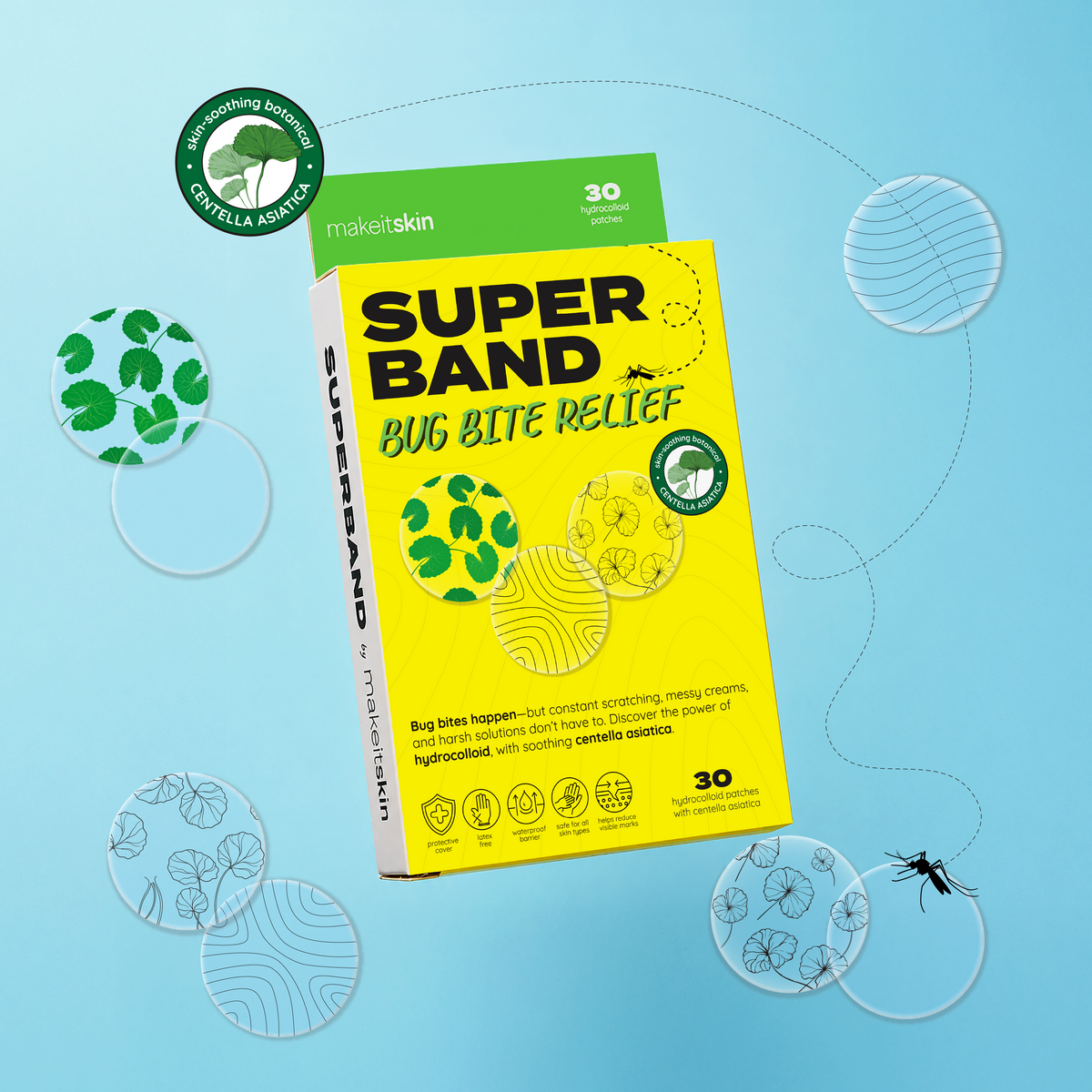
For bites specifically, our SUPERBAND Bug Bite Relief patches ($16) pair the hydrocolloid layer with centella asiatica. Centella has its own scar literature: in a randomised controlled trial of 280 patients following open carpal tunnel release surgery, Balevi and Balevi (2023), writing in the Journal of Hand Therapy, found that a 1% Centella asiatica cream applied to the scar significantly improved overall Vancouver Scar Scale scores at three to six months. That trial studied a surgical incision treated with a cream, not a bug bite treated with a patch, and we are not claiming our patches reproduce its result.
If the bite is somewhere a pre-cut round will not sit, a SUPERBAND Cut-To-Size sheet ($20) can be trimmed to the shape of the spot. For bites you pick up away from home, SUPERBAND On-The-Go ($15) is the pre-cut pack that lives in a bag.
SUPERBAND Bug Bite Relief
16.00 USD
Shop now
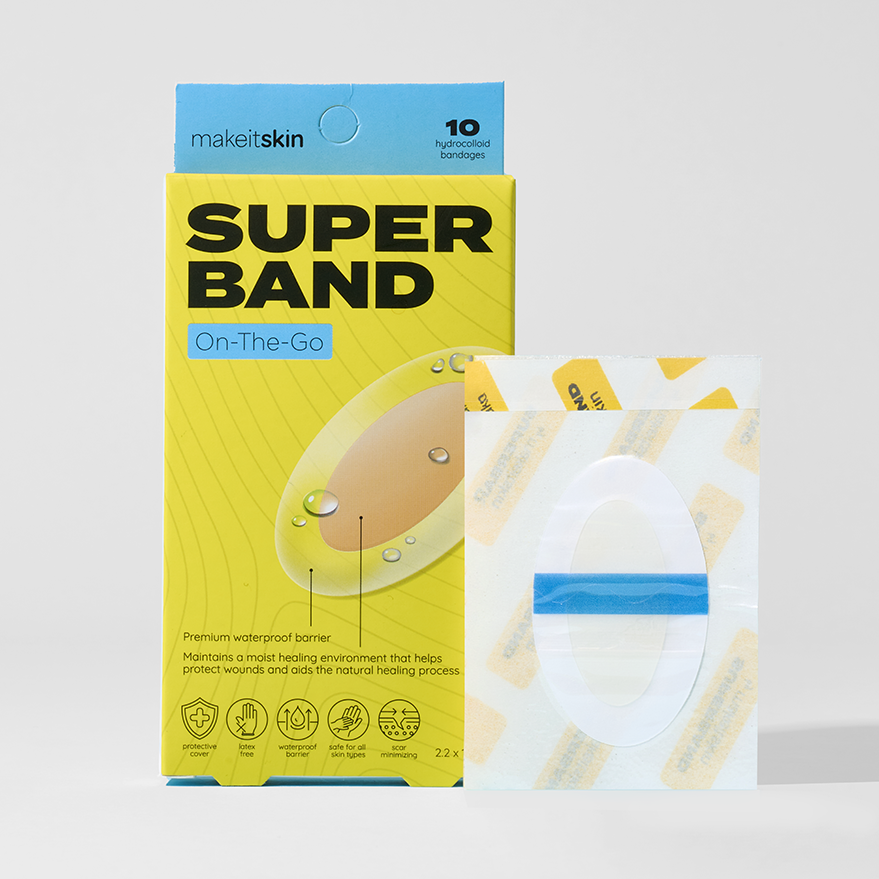
SUPERBAND On-The-Go
15.00 USD
Shop now
Whatever brand you reach for, the format matters more than the logo. A thin hydrocolloid patch beats a gauze pad here because of the seal, and any patch beats an uncovered scratched bite.
Step 5. Leave the patch on until it asks to be changed
Multi-day wear is the whole mechanism. Change it when the gel window has gone fully opaque or the edges are lifting, and resist the instinct to peel and inspect every few hours. The RCT above compared multi-day occlusion against daily dressing changes, and multi-day occlusion produced both the faster healing and the better Day 28 appearance.
Keep covering until the skin has visibly closed. On a scratched bite that is usually three to seven days.
Phase 2: after the skin closes, weeks 2 to 24
The wound is shut and a flat brown or pink mark remains. Now the job is pigment, and the tools change completely.
Step 6. Sunscreen, every day the area is uncovered
UV drives melanin production in skin that is already inflamed, which is why new marks darken over a summer instead of fading. The AAD's guidance on fading dark spots recommends sun protection, avoiding peak midday sun between 10 a.m. and 2 p.m., and using gentle products that do not sting or burn on application.
Ankles, forearms and calves collect bites and sun in the same season, and they are the areas people forget when they apply sunscreen to a face. Broad-spectrum SPF on the spot, reapplied through the day, is the habit worth keeping up here.
Step 7. Keep the skin moisturised and hands off
Dry skin itches, and a healing mark that itches gets scratched a second time. A plain fragrance-free moisturiser over the closed area is enough.
Step 8. Hold off on brightening actives until the barrier is intact
Vitamin C, niacinamide, retinoids and acids belong to this phase, never the previous one. The PIH review in the Journal of Clinical and Aesthetic Dermatology is explicit that topical depigmenting agents need care, because irritation from the treatment itself can deepen the hyperpigmentation you are trying to clear. Introduce one product at a time onto fully closed skin and stop anything that stings.
Give it time. Fading is measured in months, and marks on deeper skin tones tend to sit longer.
If your skin barrier is already reactive
People with eczema, psoriasis or generally sensitive skin tend to react harder to bites and stay itchy for longer, which means more scratching and more chance of a mark. Early cover earns its place for this group. Patch-test the adhesive on unbroken skin first if you have reacted to dressings before, and if you are already using a prescription topical on that area, check with your prescriber before sealing it under an occlusive patch. We have written more on the kid version of this problem in gentle patches for children who scratch mosquito bites, and on how patches compare with creams in our 2026 bug bite relief patch roundup.
When to stop treating this at home
Get a clinician involved if you see spreading redness, warmth, swelling that keeps growing after 48 hours, or yellow or green discharge. The AAD advises seeing a board-certified dermatologist promptly if you develop fever, body aches, headache or a spreading rash after a bug bite. A raised, thickened scar that keeps growing past the original wound edge also warrants a professional look rather than another patch.
FAQ
Will a scratched mosquito bite definitely scar?
Usually no. Most leave post-inflammatory pigment that flattens and fades over months rather than permanent scar tissue. Deep gouging, repeated re-opening of the same bite and infection are the factors that push it toward a true scar.
Can I put hydrocortisone cream under a hydrocolloid patch?
Follow the product label. Occlusion can increase how much of a topical steroid the skin absorbs, so unless the label supports covering it, use the cream at a different time of day and apply the patch to clean dry skin.
How long should a patch stay on a scratched bite?
Until the gel window turns fully opaque or the edges lift, which is typically one to three days per patch. The healing advantage in the 28-day RCT came from multi-day occlusion rather than daily changes.
Do bug bite patches stop the itching?
Covering the bite removes your access to it, which breaks the scratch cycle mechanically, and many people describe the sealed environment as more comfortable. For the histamine reaction itself, the AAD points to a cold pack or an anti-itch cream such as hydrocortisone.
Is it too late if the mark has already formed?
No. Once the skin is closed you are in Phase 2, where daily sun protection does most of the work and gentle brightening actives can help. Expect months rather than weeks, and see a dermatologist if a mark is not budging.
Keep a few patches where the bites happen: the Bug Bite Relief pack by the back door, On-The-Go in the bag you take outside. The first hour after the skin breaks is the cheapest time to prevent a mark.


