
Kid Scratching Mosquito Bites? Match the Patch to the Stage
Yes, gentle patches can help a child who keeps scratching mosquito bites, but the right patch depends on what the bite looks like right now. Repellent stickers go on clothing before any bite, drug-free grid stickers are designed for an intact itchy welt, and a hydrocolloid patch is the better fit once the skin has been scratched open. Pair any patch with a cold compress or an itch remedy your pediatrician approves, and see a doctor if the bite looks worse.
We make SUPERBAND hydrocolloid bandages at MAKEITSKIN, including a bug bite patch, so we have a stake in this question. We'll say plainly where our patch fits and where another type of product does the job better.
Most "best bug bite patch" lists put three very different products side by side. One is a repellent that never touches the bite. One is a textured sticker with no active ingredient. One is a wound dressing. Each answers a different moment in the life of a bite, which is why a parent can buy a well-reviewed patch and still watch a child dig at the same spot all evening.
The three stages of a kid's mosquito bite
A bite moves through stages, and the skin changes at each one.
Before the bite. Nothing to treat yet. The only job is keeping mosquitoes off.
Intact welt. A raised, itchy bump with unbroken skin. The itch comes from the body's allergy-type reaction to mosquito saliva, which is why MemorialCare Miller Children's notes that antihistamines can reduce itching and swelling. According to St. Louis Children's Hospital, most mosquito bites itch for 3 or 4 days.
Scratched open. The top of the bump is broken, maybe crusted or weeping a little. At this point you are caring for a small wound as well as an itch. St. Louis Children's points out that infection at a bite site usually comes from scratching with dirty fingers.
Matching the patch to the stage
| Stage | What you see | Patch type | Examples | How it works |
|---|---|---|---|---|
| Before the bite | Clear skin, heading outdoors | Repellent sticker (on clothing) | NATPAT BuzzPatch | Essential-oil scent released from a sticker on clothes |
| Intact welt | Raised, itchy bump, skin unbroken | Drug-free grid sticker | NATPAT MagicPatch, Moskinto | Raised grid presses on the skin; no active ingredient |
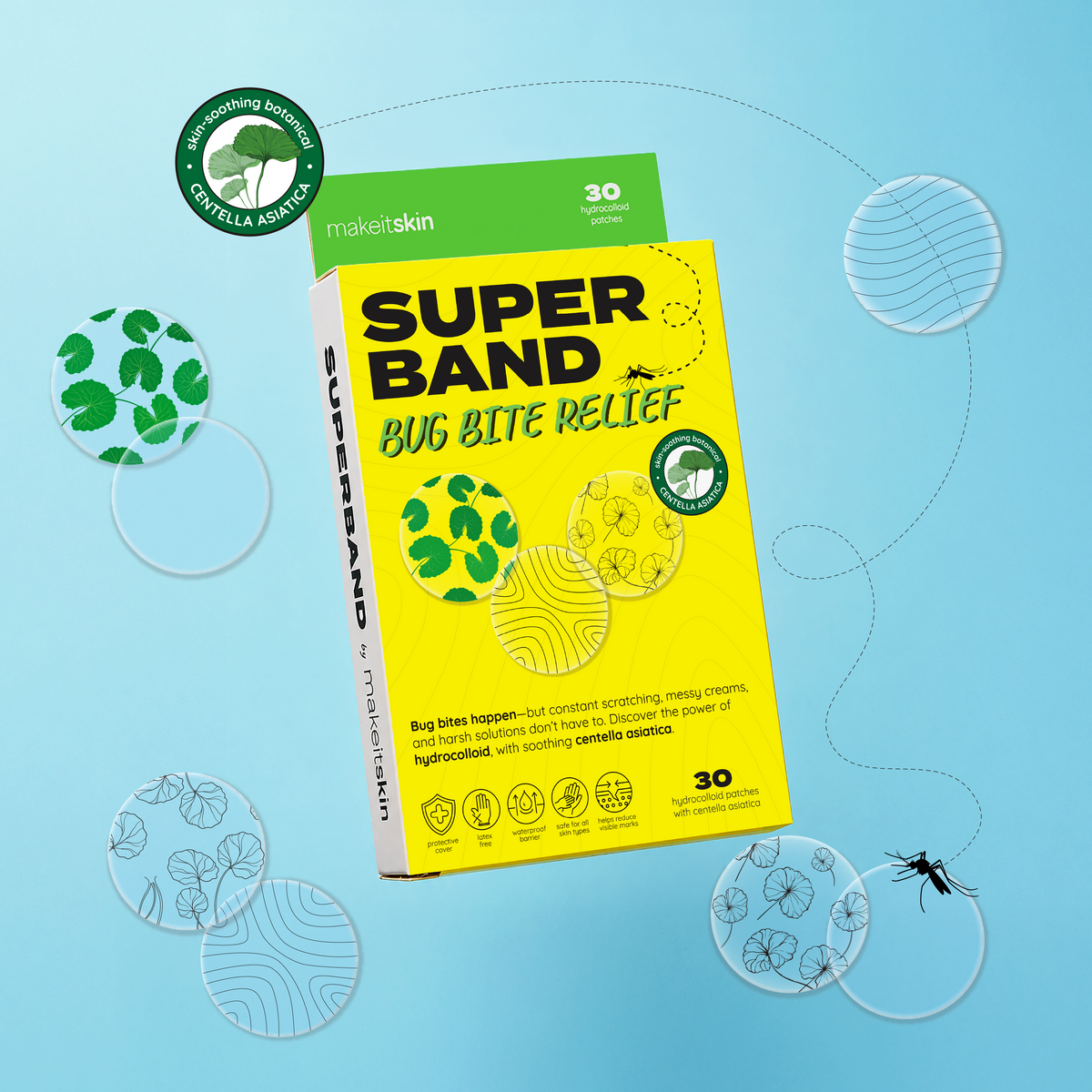
| Scratched open | Broken skin, crust or weeping | Hydrocolloid patch | SUPERBAND Bug Bite Relief | Sealed, absorbent cover that also blocks fingernails |
Use the table as a starting point. Some bites sit between stages, and some kids have a dozen bites at different stages on the same leg.
Before the bite: repellent stickers go on clothes
BuzzPatch is the product most often mixed up with bite relief. NATPAT describes BuzzPatch as a mosquito repellent patch made of non-woven fabric infused with citronella and other essential oils, and it is applied to clothing rather than skin. It is designed to reduce bites. It does nothing for a bump that is already there, so it belongs in the bag you pack for the park.
If your goal is fewer bites, ask your pediatrician which repellent fits your child's age, and keep a relief option on hand for the bites that get through anyway.
Intact welt: cool it, treat the itch, consider a grid sticker
For an unbroken itchy bump, the first steps come from clinical guidance. The American Academy of Dermatology tells kids to wash the bite with soap and water, use calamine lotion or another anti-itch cream, put ice on a swollen bite, and avoid scratching. St. Louis Children's suggests 1% hydrocortisone cream for itching and recommends cutting a child's fingernails short.
Grid stickers are a reasonable add-on here. NATPAT states that MagicPatch and Moskinto are both drug-free stickers with no active ingredients that rely on a raised grid pattern, and that they are applied to clean, dry skin before scratching. On its how-to page, NATPAT says each MagicPatch provides relief for up to 7 days. Those are the maker's own claims. For a child who reacts to creams, a sticker with nothing to absorb into the skin can be an easy first thing to try.
Grid stickers are built for the intact stage. Once a bite is scratched open, their own directions (clean, dry skin before scratching) no longer describe what you're looking at.
Scratched open: treat it as a small wound
Broken skin changes the job. Valley Children's Healthcare advises washing the area and covering the bite with a bandage to keep dirt and germs out and to create a barrier against scratching.
A hydrocolloid patch fits this stage well. It seals over the spot, absorbs a small amount of fluid, and puts a smooth layer between the bite and a child's fingernails. According to its product page, our SUPERBAND Bug Bite Relief pack ($16) holds 30 hydrocolloid patches infused with centella asiatica. They are latex-free and waterproof, so they can stay on through bath time and outdoor play. For more on how hydrocolloid compares with plain adhesive bandages, see our guide to choosing hydrocolloid bandages.
Why centella? It is a plant extract with a long research record in wound care. A 2024 review in Pharmaceutics by Witkowska and colleagues describes how its active compounds (asiaticoside, madecassoside, asiatic acid and madecassic acid) support collagen synthesis and modulate inflammation in topical wound-healing research. That research covers centella as an ingredient. It is not a clinical trial of our patch, and we don't claim our patch heals bites faster than any other product.
One parent's review on our homepage says the patch "protected my daughter from scratching her bug bites raw." That is one family's experience, and it reflects the main thing any cover does for this stage: it keeps fingernails off the skin.
Our label directions set the limits. They say the patch is for external use only, not for deep or infected wounds, and should be removed if irritation, rash or worsening occurs.
SUPERBAND Bug Bite Relief
16.00 USD
Shop now
Is a patch safe for my child's sensitive skin?
Any adhesive can bother a reactive child, so test one patch on one bite first and check the skin when you remove it. Centella itself is generally well tolerated. A review in the Journal of Integrative Dermatology reports low rates of irritation or sensitization in human studies using low-concentration extracts, along with rare cases of allergic contact dermatitis. If your child has had a reaction to plant extracts before, a drug-free grid sticker or a plain bandage may be the gentler choice.
Creams and patches can work together, but keep them separate. Apply patches to clean, dry skin so the adhesive holds, and don't seal a medicated cream under any patch unless that cream's label says it's okay. A simple routine is a cold compress and itch cream on intact bites during the day, and a patch on the scratched one before bed.
When to call the pediatrician
The AAD tells kids to see a doctor if a bite looks worse or they just can't stop scratching. Dermatology Physicians of Connecticut advises watching for signs of an allergic reaction: severe swelling, especially in the face, difficulty breathing, or hives. Spreading redness, warmth, pus or a fever alongside a bite are also reasons to call your pediatrician. No patch, ours included, treats an infection or an allergic reaction.
FAQ
Can I put a pimple patch on my kid's mosquito bite?
Many pimple patches are hydrocolloid, so they can cover a scratched bite. They are sold and labeled for acne, though, so check the label and consider a patch whose directions actually cover bites and children's skin.
How long should a hydrocolloid patch stay on a scratched bite?
Follow the directions on the patch you use. Change it when it loosens, gets dirty, or turns noticeably white and puffy with absorbed fluid, and wash the area before applying a fresh one. Our label says not to reuse a patch.
My child has a dozen bites. Do I need a patch on every one?
Usually no. Most intact bites settle with cold compresses and an approved itch cream. Save patches for the bites your child keeps returning to and any that are already broken open.
Does covering a bite stop it from scarring?
Covering reduces scratching, which is the main way a bite turns into a wound. It can't guarantee a bite won't leave a mark. Our article on keeping a scratched mosquito bite from scarring walks through the days after the skin breaks.
Keep one option for each stage at home
A practical home setup covers all three moments: a repellent plan for outings, an itch remedy for fresh welts, and a cover for the bite that's been scratched open. For that last one, our SUPERBAND Bug Bite Relief patches are made for the job. If you're still comparing patches against creams, our patch vs cream comparison lays out the trade-offs.


