
What Prevents Blisters and Chafing on Long Runs? A Zone Map
For long runs, the options with the clearest support are well-fitted shoes with moisture-wicking socks, thin tape on known hot spots, a lubricant on skin-to-skin chafing zones, and a thin patch where you reliably blister. We rank five options below (socks and fit, paper tape, lubricant, a pre-cut hydrocolloid patch, and powder) on published evidence, how many friction zones each covers, and whether it works mid-run without scissors. Then we match them to the zones where runner blisters were actually recorded: toes first, then the ball of the foot, heel and sole.
We make SUPERBAND hydrocolloid bandages at MAKEITSKIN, so one of our products appears in this list. We placed it where the evidence puts it, and we say plainly where tape, socks or a balm do the job better.
Where long runs rub: the zone data
Location matters because each spot fails in its own way. In an observational study of 50 runners at the five-day, 219 km Al Andalus Ultimate Trail, published in the Journal of the American Podiatric Medical Association (2014), 76% of participants had blisters after four days of running. Most blisters formed on the toes (65%), followed by the ball of the foot (16%), the heel (14%) and the sole (5%).
That was a multi-day ultra, so your split on a Sunday long run may differ. The toe-heavy pattern does repeat elsewhere: a randomized trial in RacingThePlanet desert ultras, published in Wilderness & Environmental Medicine (2014), recorded 59% of blisters on the toes. The same research group notes that friction blisters occur in up to 39% of marathoners (PubMed abstract).
Chafing mostly happens above the ankle. Healthline lists the armpits, inner elbows and knees, chest, groin and thighs as common running sites, and Cleveland Clinic notes that nipple chafing is common among athletes.
How we ranked the options
We used three criteria, in this order:
- Evidence. Backing from a professional body such as the American Academy of Dermatology, or a controlled trial in runners.
- Zone coverage. How many of the friction zones above the tool helps with.
- Mid-run practicality. Whether you can apply or reapply it on course without scissors, a flat surface or a medical tent.
We did not run our own product trial for this article. The ranking reflects published research and official product information.
1. Well-fitted shoes, wicking socks and fitted clothing
This is the base layer for every zone, feet and body alike. Board-certified dermatologists at the American Academy of Dermatology (AAD) recommend nylon or moisture-wicking socks, a second pair if one isn't enough, and shoes that are neither too tight nor too loose. The AAD's framing is useful: blisters can be prevented by preventing chafing.
For the body, the same AAD page advises moisture-wicking, loose-fitting clothes during activity. Healthline prefers running clothes snug enough that skin can't slide against the fabric, while noting looser clothing can work if it prevents skin-to-skin contact. It also recommends flatlock seams, which lie flush against the fabric, and longer running pants under shorts so the thighs rub fabric instead of skin.
Its limit is timing. Fit addresses the cause, yet a hot, wet late-race stretch can still raise a hot spot, which is why the next four tools exist.
2. Thin paper tape on known hot spots
Of the five options, paper tape has the most direct trial evidence we found for blister prevention in runners. In the Pre-TAPED II trial, published in the Clinical Journal of Sport Medicine (2016), researchers enrolled 128 runners in the 2014 RacingThePlanet 250 km desert ultramarathons. They applied paper tape before the race to blister-prone areas of one randomly selected foot and used untaped areas of the same foot as the control, and the authors reported that the tape prevented foot blisters.
The earlier Pre-TAPED trial found no significant protective effect, although runners tolerated the tape well and reported high satisfaction (PubMed abstract). The evidence is promising and still mixed.
Tape ranks second because it covers toes, heel and ball of foot cheaply and thinly. Its practical drawback is preparation: wrapping a small toe neatly takes a few calm minutes at home, which you rarely have at an aid station.
3. Lubricant or anti-chafe balm
A lubricant reduces friction on the skin surface, a different mechanism from a patch or tape, which adds a layer. It is the main tool for the chafing zones that patches cover poorly: inner thighs, groin, underarms. WebMD recommends petroleum jelly or a similar product on hot spots to reduce friction, and the AAD's blister advice, as summarized by Canadian Running, suggests petroleum jelly on foot problem areas if bandages aren't helping.
Purpose-made balms exist for sweat. RacingThePlanet, which organizes multi-stage desert ultras, describes Bodyglide as a balm resistant to perspiration and water that can last for hours. It ranks third on guidance-level evidence and broad coverage, since it works on both feet and body. Expect to reapply on very long efforts, and keep it away from any skin where you plan to stick a patch or tape.
4. A pre-cut hydrocolloid patch on a hot spot: SUPERBAND On-The-Go
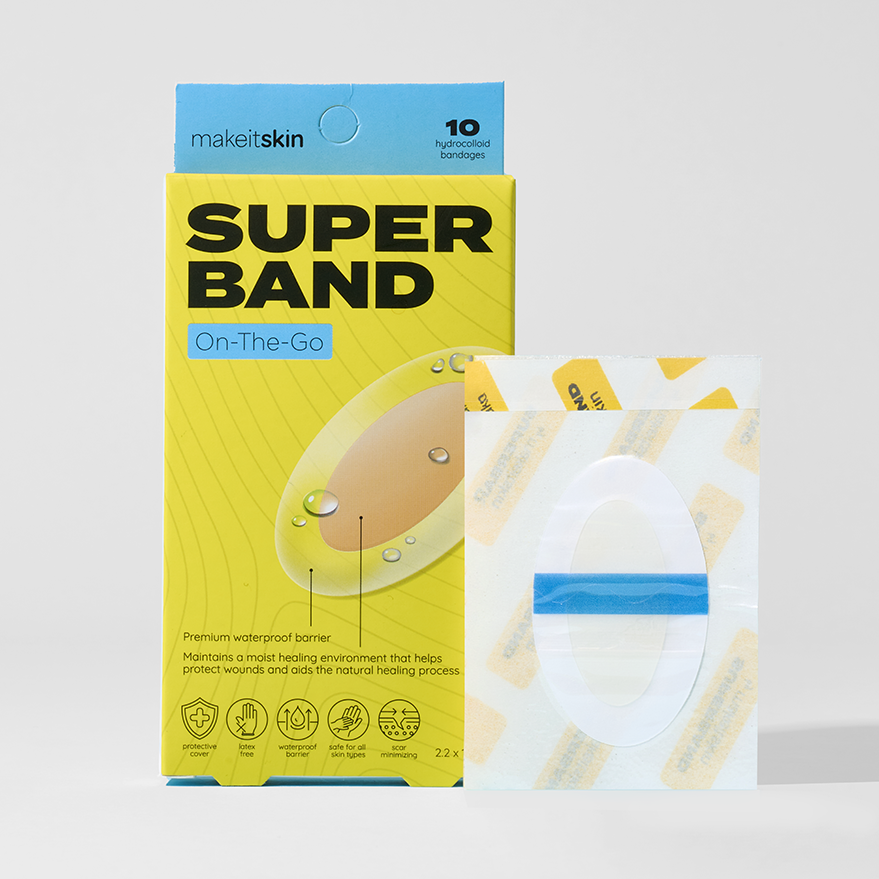
For problem areas like the backs of the heels or the toes, the AAD suggests applying adhesive moleskin or another soft bandage before a blister forms (Canadian Running). A hydrocolloid patch is one kind of soft covering: a thin gel-forming layer that sits between skin and sock.
SUPERBAND On-The-Go is our pre-cut version. Its product page describes it as pre-cut to a standard size with no scissors required and sealed with a waterproof barrier. Our Amazon listing gives the size as 2.2 x 1.4 in, 10 per pack, and it sells for $15 on our site. The directions are short:
- Press it down firmly from the center outward.
- Peel away the blue top film.
- Hold your palm over it for 10-15 seconds so body warmth sets the adhesive.
- Leave it on. It is designed to stay on for multiple days; replace it once it turns white and the bubble reaches the edges.
It sits fourth because we know of no controlled trial of hydrocolloid patches, ours or anyone else's, for blister prevention in runners. Its support is the AAD's general soft-bandage advice, and its coverage is one spot at a time. It earns its place on the third criterion. It needs no scissors or home preparation, so it is easy to apply from a pocket mid-run.
Know its limits. A standard rectangle suits the flatter zones (back of the heel, ball of the foot, sole) better than small toes, and our application guide already notes that pre-cut shapes do not hold well on fingertips, a similarly small, curved surface. The trail-running brand Sidas also cautions against covering your feet with multiple hydrocolloid dressings from the start. Put one where you actually blister. If a heel-shaped pre-cut suits your foot better, BAND-AID sells a Hydro Seal blister pack for heels.
5. Powder
Powder targets moisture only. WebMD notes that powders can help wick moisture from the skin, and the AAD advice summarized by Canadian Running lists talcum powder alongside petroleum jelly as a fallback. Because it addresses moisture only and the AAD advice frames it as a fallback, it ranks last.
Zone map: what to use where
The blister shares come from the JAPMA ultramarathon study above. The right-hand column is our recommendation built from the ranking, so treat it as a starting point to test in training.
| Zone | Share of blisters (JAPMA 2014) | What tends to go wrong | What we'd use |
|---|---|---|---|
| Toes | 65% | Small, curved surfaces; a flat rectangle leaves edges free to lift | Toe-box fit, paper tape, or a narrow strip trimmed from a sheet at home |
| Ball of foot | 16% | Wide pressure area under the forefoot | Cushioned wicking socks plus a pre-cut patch or tape on a known spot |
| Heel | 14% | Rubbing against the heel counter, over a curved surface | Heel fit and lacing, then a pre-cut or heel-shaped patch |
| Sole | 5% | Fewest blisters in the study | Socks alone, unless you have a history there |
| Inner thighs, groin, underarms | Chafing zone | Skin-on-skin or fabric rubbing, worse with sweat | Wicking clothing that stops skin-on-skin contact, plus lubricant |
| Nipples | Chafing zone | Shirt or bra moving across sensitive skin | A secure sports bra or snug shirt; Healthline suggests a bandage or sports tape |
Trimming your own for toes and odd shapes
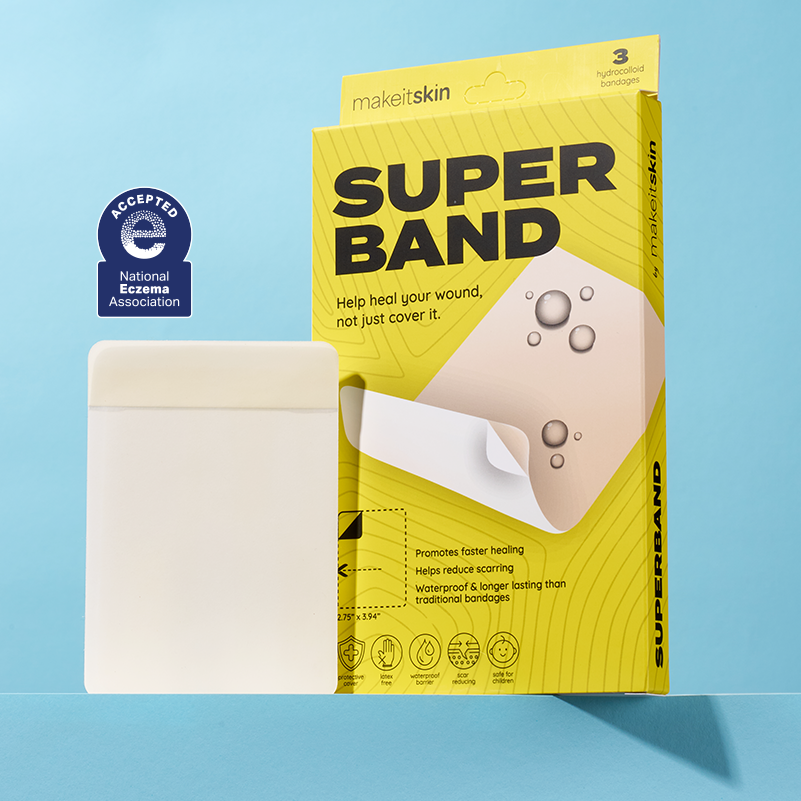
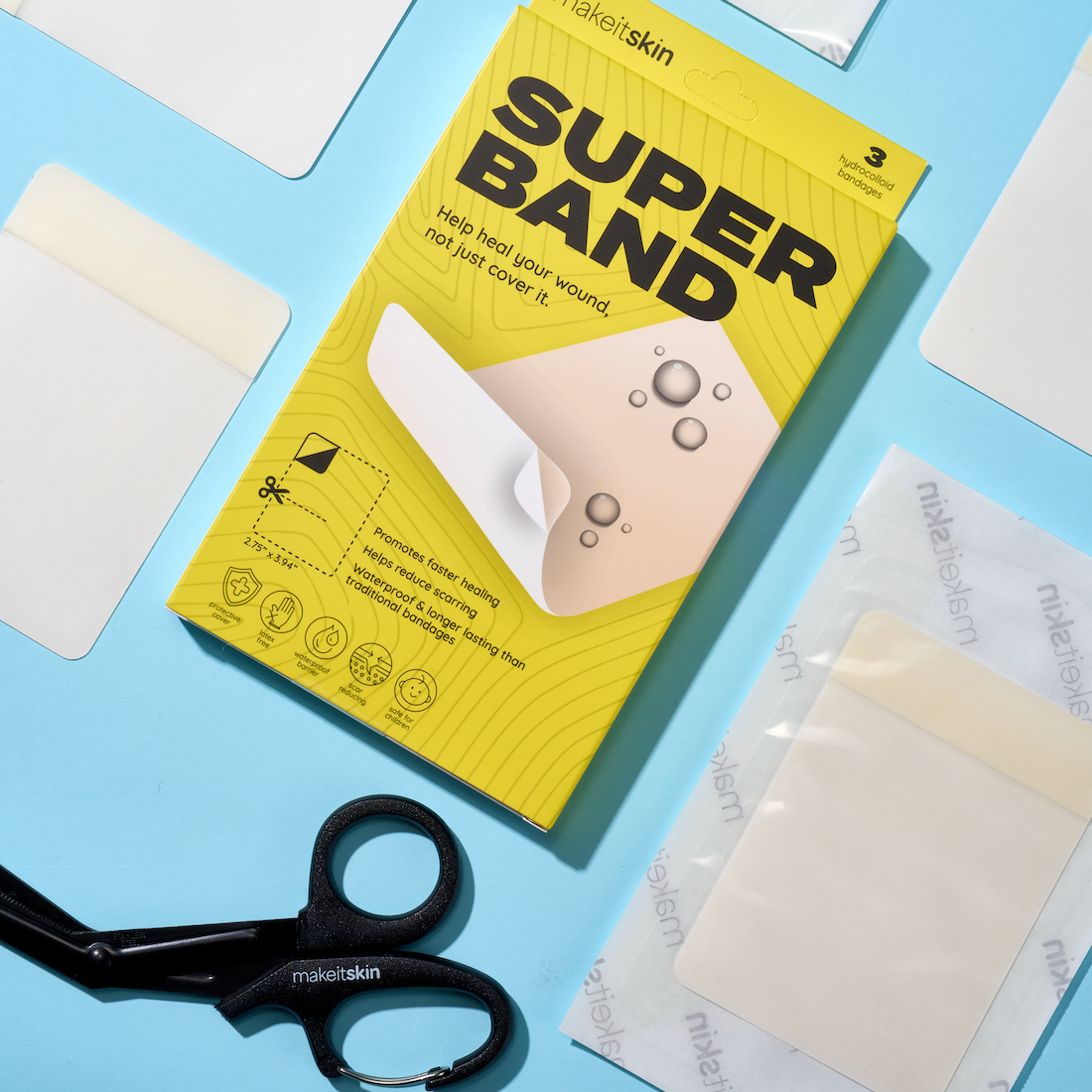
When a pre-cut shape doesn't line up with your hot spot, cut one that does the night before. SUPERBAND Cut-To-Size is a flat sheet you trim yourself ($20, product page). Our Precision Carabiner Shears are $10, and the Cut-To-Size Starter Kit bundles the sheet with shears for $25.
A practical approach is to cut a strip narrower than the toe and round the corners so no point catches the sock. The wrap our application guide describes for fingertips can be adapted to a toe. Test any home-cut shape on a shorter run before you trust it on race day.
For more on race-specific taping and patches, see our guide to blister prevention for marathon training. For packing a kit, see what to put in a gym-bag first aid kit for blisters.
When a blister forms anyway
The AAD advises that if you drain a blister, you pierce one edge with a needle sterilized in rubbing alcohol, keep the "roof" of skin in place to protect the raw skin underneath, wash with soap and water, apply petroleum jelly, and keep it covered. Redness, pus, or increasing pain or swelling are reasons to see a doctor or board-certified dermatologist.
FAQ
Can I use Vaseline and a patch together?
Yes, on separate skin. Our application guide notes that even a small amount of product on the surrounding skin significantly compromises adhesion. Apply the patch or tape first to clean, dry skin, then put lubricant on other areas.
Should I change socks during a long run?
It can help on very long efforts. Darn Tough suggests changing socks periodically on long runs and ultramarathons, since sweat and outside moisture work against blister-free feet. A dry pair in a drop bag or car makes this easy on loop courses.
Can I keep running on a blister?
Often, if it is protected and not getting worse. adidas notes you can keep running as long as you protect the blister, and suggests stopping at the race medical tent if one forms mid-race. If swelling, pain or redness persists, adidas suggests seeing a doctor.
Does a hydrocolloid patch replace good socks?
No. The AAD's first recommendations are socks and shoe fit, and a patch protects only the spot it covers. Use patches as a targeted layer on top of that base.
If you want a hot-spot patch that lives in your running belt, SUPERBAND On-The-Go is pre-cut and ready without scissors.
SUPERBAND On-The-Go
15.00 USD
Shop now
SUPERBAND Cut-To-Size
20.00 USD
Shop now
SUPERBAND Cut-To-Size Starter Kit
25.00 USD
Shop now


