

Gym-Bag First Aid Kit: What to Pack for Blisters
A gym-bag kit needs eight things: hydrocolloid patches, a few assorted adhesive bandages, antiseptic wipes, small scissors, paper tape, one pair of nonlatex gloves, petroleum jelly or an anti-chafe balm, and a flat zip pouch to hold it all. Blisters and skin abrasions are the injuries a gym reliably produces, so the patches earn the most space. Everything on the list fits in a side pocket and weighs less than a full water bottle.
We make hydrocolloid bandages at MAKEITSKIN, which means we hear about gym-bag kits mostly when they fail: the pouch holds twenty-five plastic strips and nothing that survives a sweaty heel, or it holds a full household kit that nobody carries twice. A workout kit is a short list chosen around friction, sweat and shared equipment.
The four injuries a gym actually produces
Home kits are built for kitchen cuts. A training bag sees a narrower set of problems.
Friction blisters come from rubbing, and a 1995 review in Sports Medicine describes how repeated frictional force separates cells inside the epidermis before fluid collects underneath (Sports Medicine, 1995). Rowers and lifters get them on the palms, runners on heels and toes, everyone gets them from new shoes.
Then there are the raw spots that stop just short of blistering: chafed inner thighs, a bra-line rub, a shin scraped on a barbell. The American Academy of Dermatology groups these with blisters, because both start as chafing and both respond to the same prevention: moisture-wicking socks and clothing, and petroleum jelly or soft bandages on known problem areas (AAD).
Small cuts and scrapes make up the third group, usually from plate edges, rig frames or turf.
The fourth is the one people underrate. Skin infections account for up to 10% of time-loss injuries in some sports, according to the Minnesota Department of Health, and CDC guidance for athletes is direct about the reason: MRSA and similar bacteria spread through skin-to-skin contact and contaminated surfaces, so cuts and wounds should stay covered and hands should be washed before and after using shared weight equipment (CDC). A kit that cannot get a wound covered before you touch a barbell is missing the point of carrying one.
The eight-item list
| Item | How much | What it is for |
|---|---|---|
| Hydrocolloid patches | 4-6, mixed sizes | Blisters, deroofed blisters, raw friction spots, scrapes you want to keep covered through a shower |
| Assorted adhesive bandages | 5-6 | Small clean cuts where a thin strip is enough |
| Antiseptic wipes | 3-4 packets | Cleaning skin and your own hands when there is no sink nearby |
| Small scissors | 1 pair | Trimming a patch, cutting tape, opening packaging |
| Paper tape | 1 small roll | Securing a dressing edge at a high-movement site such as a knuckle or heel |
| Nonlatex gloves | 1 pair | Helping someone else with a bleeding wound |
| Petroleum jelly or anti-chafe balm | 1 travel tube | Pre-workout friction reduction on thighs, heels, underarms |
| Flat zip pouch | 1 | Keeps the contents findable and keeps used wrappers out of your bag |
The American Red Cross checklist for a full home kit runs to 25 adhesive bandages, gauze pads, roller bandages, a cold compress, a breathing barrier and more. That kit belongs in a car or a closet. The gym version keeps the wound-covering and cleaning layer of it and drops the trauma layer, on the assumption that anything larger than a scrape means leaving the gym.
Two Red Cross habits are worth importing whole: include your personal items, such as an inhaler, an EpiPen or your own medication, and check the kit on a schedule, because contents expire and adhesives lose grip.
Why the patch choice matters more than the bandage count
Hydrocolloid dressings hold wound fluid against the skin and form a gel, which keeps the surface moist rather than letting it dry into a scab. Dermatologists recommend the same principle for ordinary cuts: keep the wound moist and covered, and skip routine topical antibiotics, which carry a real risk of irritating the skin (AAD).
For blisters specifically, DermNet notes that hydrocolloid blister plasters may promote faster healing, and that keeping the blister roof in place reduces pain and lowers the chance of infection. Mayo Clinic makes the same point about intact skin acting as a natural barrier to bacteria (Mayo Clinic). The 1995 Sports Medicine review goes one step further for the worst case: on a blister whose roof has already torn away, hydrocolloid dressings provide pain relief and may allow continued physical activity.
That last finding is the honest argument for carrying patches to a workout. Most blisters heal on their own in one to two weeks whatever you do (AAD). What a good dressing buys you is comfort, protection from further rubbing, and a cover that stays put through sweat and a locker-room shower.
Hydrocolloid research is broad but uneven. A 2020 systematic review and meta-analysis pooling eight randomized pressure-ulcer trials found hydrocolloid dressings were not significantly better than alternative dressings for that indication (systematic review and meta-analysis, 2020). Category research on hydrocolloid dressings is not a trial of any single product, including ours, and we do not claim it as one.
How we pack ours
Our own gym pouches hold two products and a pair of scissors.
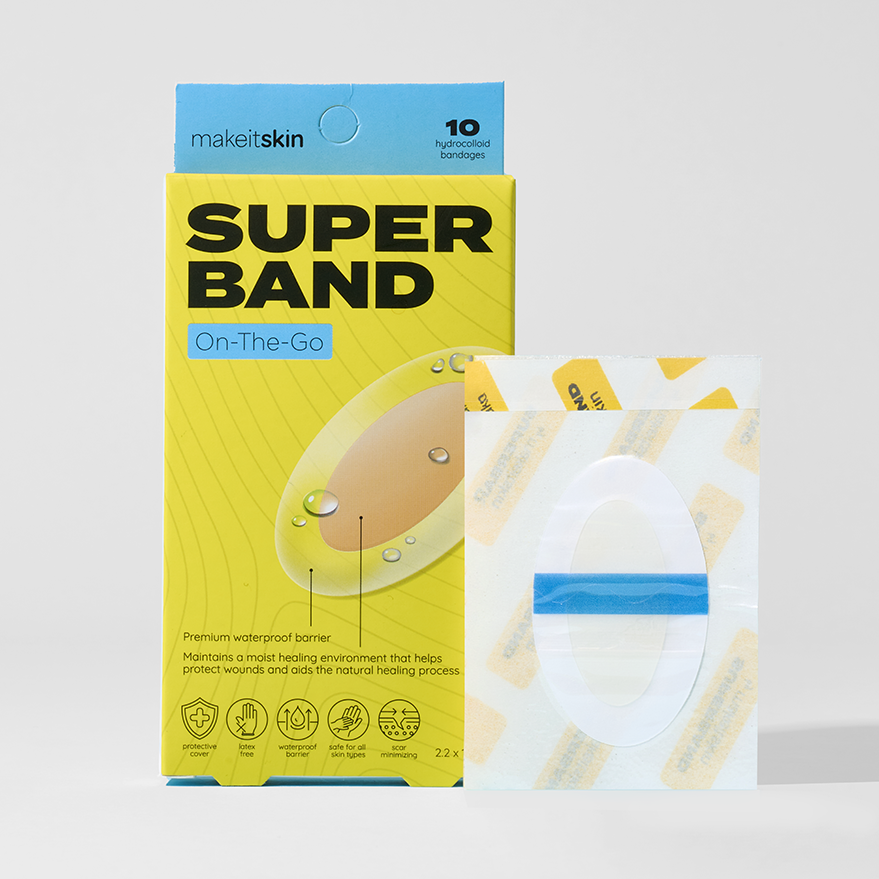
SUPERBAND On-The-Go ($15) is the pre-cut option and the one we reach for in a bag. Pre-cut shapes come out of the wrapper ready to go, which is what you want standing in a locker room with a heel that has just started to burn.
SUPERBAND Cut-To-Size ($20) is a flat sheet you trim to the shape you need, and it is the reason we carry the Precision Carabiner Shears ($10) clipped to the outside of the bag. A sheet covers the awkward sites a rectangular strip leaves half-exposed: a knuckle, the side of a big toe, the arch under a shoe seam, the tip of a finger. Trim the corners round. Square corners are the first thing to peel when a sock or a grip starts moving across them.
SUPERBAND On-The-Go
15.00 USD
Shop now
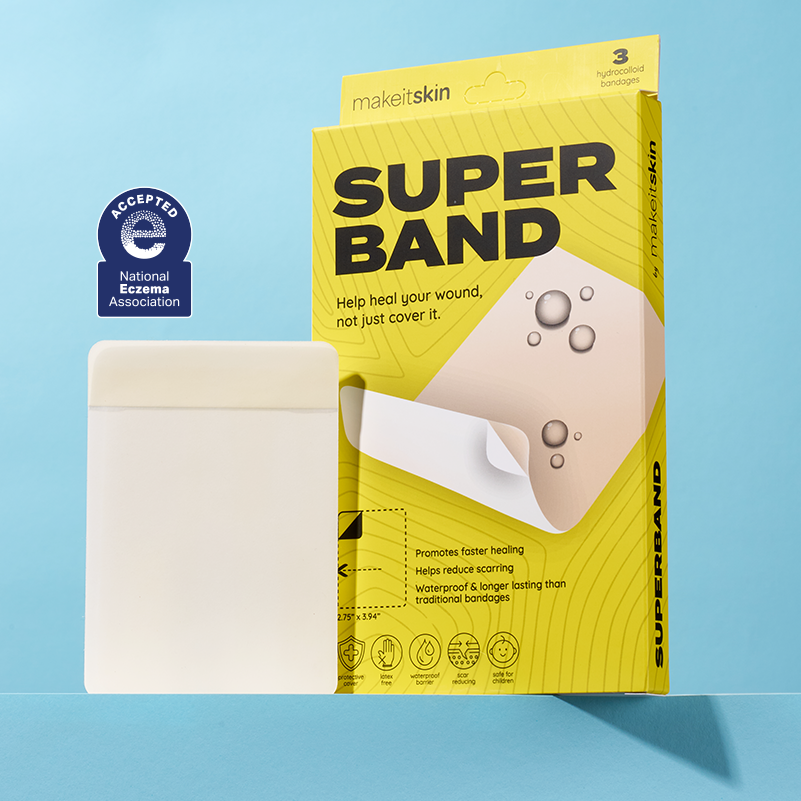
SUPERBAND Cut-To-Size
20.00 USD
Shop now
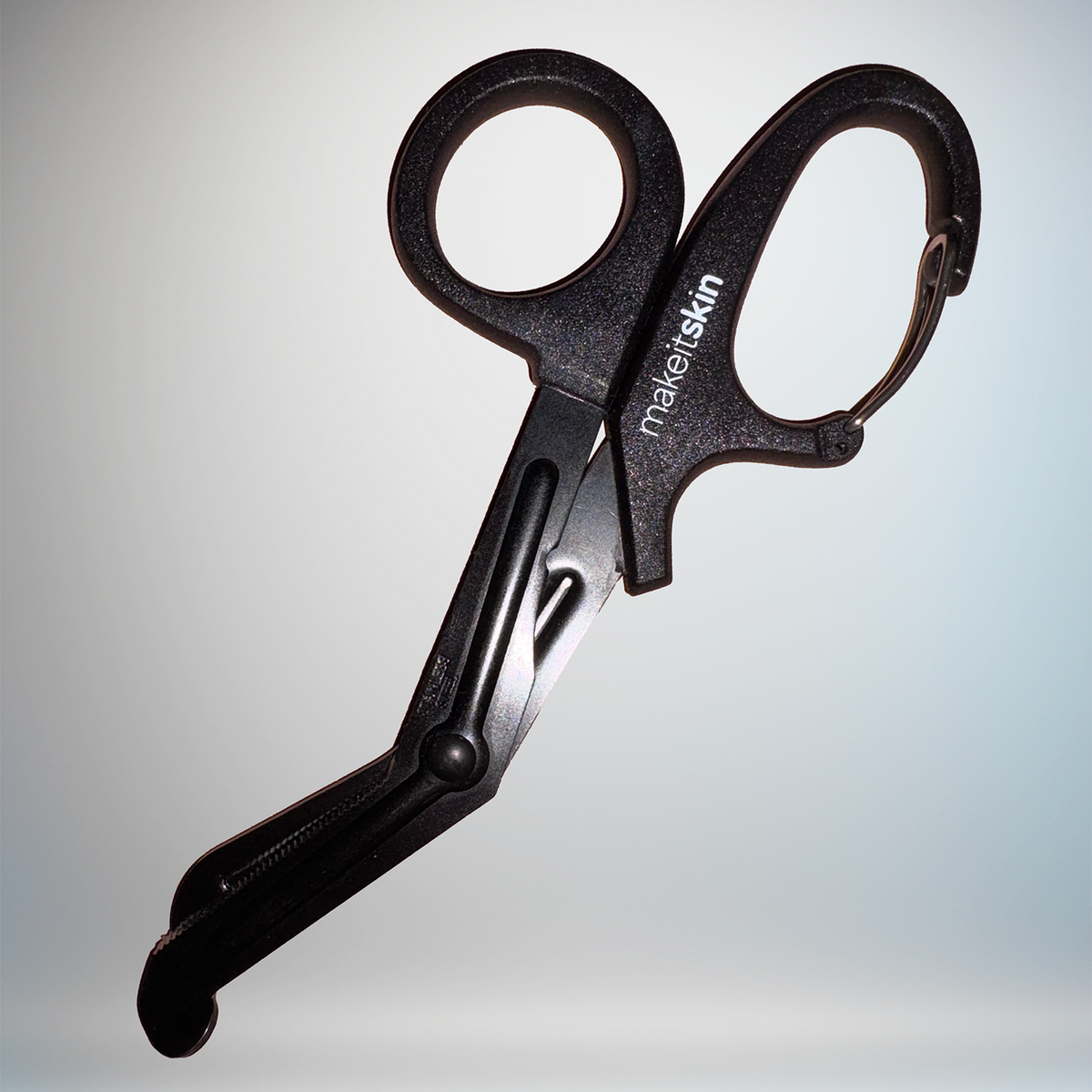
Precision Carabiner Shears
10.00 USD
Shop now
If you would rather not assemble anything, the SUPERBAND Cut-To-Size Starter Kit ($25) and the Bandage Essentials Bundle ($31) are the two pre-built starting points in our catalog. Both still need your antiseptic wipes, gloves and personal medication added.
Applying a patch in a locker room
The application matters as much as the product, and the gym is a hostile place to do it.
- Wash your hands, or use an antiseptic wipe if you are not near a sink. CDC guidance puts hand hygiene before and after wound care at the top of the list for athletes.
- Clean the area with cool water and a mild cleanser to remove dirt and debris, following the AAD's steps for minor cuts.
- Dry the skin around the wound completely. Sweat is the most common reason an adhesive fails on a heel or a palm.
- Trim to size if you are using a sheet, leaving a border of intact skin around the wound so the adhesive has somewhere to grip.
- Warm the patch under your thumb for a few seconds after applying. Hydrocolloid adhesive bonds better with body heat and light pressure.
- Leave it alone. Frequent peeling and re-sticking irritates the healthy skin under the border, which is where most dressing irritation starts.
A white or swollen look under the patch is the hydrocolloid absorbing fluid. Change it when the gel reaches the edge, when it starts lifting, or when the label directions say so.
When the kit is the wrong tool
A pouch of patches does not cover everything a training bag can be asked to handle.
Leave the blister alone rather than draining it if it is intact and tolerable, and stop the activity that caused it. The AAD advises pausing the offending activity, and Mayo Clinic recommends changing into dry socks, since moisture raises blister risk.
See a clinician for a wound that will not stop bleeding, a burn worse than a small first-degree one, anything with pus, spreading redness, warmth or fever, or a bite that breaks the skin. CDC guidance for athletes is specific about pain, pus, redness, swelling and warmth as signs of skin infection, and about getting care early to reduce lost training time. Do not pop or drain a suspected infection yourself.
And if a wound cannot be adequately covered, that is a reason to skip contact training that day rather than tape harder over it.
Restocking, briefly
Adhesives dry out, wipes evaporate, and the patch you need is always the size you used last month. We check pouches at the start of each training block: replace what is missing, check dates on anything medicated, and confirm the scissors are still clipped where they belong. The Red Cross gives the same instruction for household kits, which is that contents expire and used items need replacing before the kit is needed again.
For deeper reading on the pieces of this kit, we have written about blister prevention across a marathon training block, choosing low-irritation patches for sensitive skin, and how to choose a hydrocolloid bandage by fit and wear time.
FAQ
How many blister patches should a gym kit hold?
Four to six, in at least two sizes. That covers one bad session plus a change partway through the week. If you train in new shoes or do high-volume rowing or pull-up work, weight the count toward the sizes that fit palms and heels.
Can hydrocolloid patches go on before a workout as prevention?
They can be used on a known hot spot, and the AAD lists soft bandages on problem areas among its chafing-prevention tips alongside moisture-wicking socks and petroleum jelly. Apply to clean dry skin as soon as a hot spot appears, while the skin over it is still intact.
Do I need antibiotic ointment in the kit?
Dermatologists do not recommend it routinely for minor cuts, because these creams and ointments can irritate the skin, and a cleaned, covered wound generally does not need them. Skip the tube unless a clinician told you to carry one, and never occlude a medicated cream under a dressing without label or clinician support.
Will a patch stay on through a shower?
Hydrocolloid dressings are designed to seal against water, which is why they suit gym use. Longevity depends on the site, the amount of movement and how dry the skin was at application. Palms and heels are the hardest cases, and a paper-tape border helps at high-movement sites.
What is the smallest kit that is still worth carrying?
Patches, wipes and scissors in a zip bag. That combination handles the blister and the scrape, and it gets a wound covered before you touch shared equipment, which the CDC treats as the core habit for athletes.
Ready to build yours? Start with SUPERBAND On-The-Go for the bag, and add Cut-To-Size for the sites a pre-cut shape will not fit.


